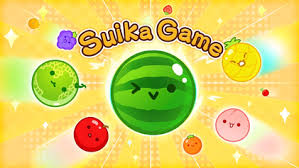
If you have been hanging around gaming forums, watching
streams, or just browsing through casual gaming communities lately, you have
probably noticed a massive influx of brightly colored, perfectly round fruits
filling up your feed. It seems like out of nowhere, everyone has become
entirely obsessed with dropping digital cherries, apples, and peaches into a
virtual box. This delightful phenomenon belongs to the watermelon puzzle genre,
a beautifully simple yet mind-bending category of casual gaming.
Today, we are going to talk about how to play and experience
these charming titles, using the most famous example of them all. If you have
not yet experienced the magic of the Suika Game, you are in for a thoroughly entertaining
treat. Grab a comfortable seat, prepare your spatial awareness skills, and
let’s dive into what makes this fruit-merging adventure so incredibly
captivating.
The Gameplay: Merging Your Way to the Top
At its core, the gameplay loop of a watermelon puzzle is a
fascinating blend of classic falling-block games like Tetris and merge-style
mobile games. However, it completely ditches the rigid grid in favor of a
bouncy, unpredictable physics engine.
When you boot up the game, you are presented with a simple,
transparent container—often resembling a square glass jar. A tiny cloud floats
at the top of the screen, carrying a random, small fruit. By moving your cursor
or finger left and right, you decide exactly where you want to drop this fruit
into the container.
The magic happens when two identical fruits physically touch
each other. The moment they collide, they merge with a satisfying little
"pop" to become a single, larger fruit of the next level. The
evolutionary chain is the entire basis of the game. You generally start with
tiny cherries, which merge into strawberries. Those become grapes, which turn
into dekopons (a type of mandarin orange), then persimmons, apples, pears,
peaches, pineapples, melons, and finally, the titular, massive watermelon.
It sounds remarkably easy, right? Just drop fruits and watch
them grow. But here is the catch: the container has a strict height limit. As
your fruits get larger, they take up significantly more space. Because the
fruits are round, they do not stack neatly. They roll, they bounce, they slide
down slopes created by other fruits, and they unexpectedly squeeze into tiny
gaps. A single misplaced apple can cause a chain reaction that shifts a massive
pineapple right to the top of the box. If any fruit breaches the line at the
top of the container, your run is instantly over. The ultimate goal is to see
how high of a score you can achieve before your box inevitably overflows, with
the holy grail being the creation of a full watermelon—or even two!
Tips for Cultivating a High Score
While the game is heavily reliant on physics and a bit of
random generation regarding which small fruits you are handed next, relying
purely on luck will result in a very quick game over. To truly master the box,
you need a bit of strategy. Here are a few friendly tips to help you reach that
elusive watermelon.
1. Keep Your Giants Grounded
The most fundamental rule of the game is to keep your largest fruits at the
very bottom of the container. If you allow a large fruit like a peach or a
pineapple to form on top of a pile of small cherries and grapes, you are
building a house on a very shaky foundation. The small fruits will get trapped
underneath, taking up valuable real estate, and it will be nearly impossible to
merge them. Try to build a solid base of large items at the bottom corners.
2. Play the Descending Size Game
Imagine a staircase. Ideally, you want your fruits arranged in descending order
of size. For example, have a melon in the corner, a pineapple next to it, a
peach next to that, and an apple beside the peach. When you finally drop a pear
onto that apple, they will merge into a peach. That new peach will merge with
the adjacent peach to form a pineapple, which merges with the other pineapple
to form a melon, and so on. Setting up these massive, multi-step chain
reactions is not only incredibly satisfying, but it is the best way to clear
out space in your box quickly.
3. Respect the Physics Engine
Remember that these fruits have weight and momentum. Sometimes, a fruit will
get stuck perfectly balancing on top of two others. You can carefully use the
weight of a heavier dropped fruit to nudge it off its perch and force it to
roll into a matching partner. Conversely, be incredibly careful dropping heavy
fruits from a high distance; they can act like a bowling ball, disrupting your
perfectly organized setup and sending a rogue strawberry flying to the top of
the screen.
4. Do Not Rush
Unlike many arcade puzzle games, there is absolutely no time limit here. The
cloud will hold your next fruit patiently for as long as you need. Take a deep
breath, look at the layout of your container, check what the next upcoming
fruit is, and plan your drop. A few seconds of planning can save a
thirty-minute run from disaster.
Conclusion
What makes this specific brand of Suika Game so
wonderful is its universal appeal. It requires zero gaming background to
understand, yet it offers enough mechanical depth to keep seasoned gamers
analyzing their screen for optimal drop points. The bright, cheerful art style,
combined with the incredibly satisfying sound design of the fruits merging,
creates a genuinely relaxing atmosphere—right up until your container is
bursting at the seams, at which point it becomes a hilarious, frantic struggle
against gravity.
Whether you are looking for a way to wind down after a long
day of work, something to keep your hands busy while listening to a podcast, or
a fun challenge to share with your friends on a gaming forum, this genre is a
perfect fit. If you are ready to test your spatial reasoning and see if you
have what it takes to build the ultimate fruit, I highly recommend giving it a
shot. Just be warned: the urge to play "just one more round" is
incredibly powerful! Happy merging, and may your container always stay tidy.












 조회 : 82